The Mended Earth Pavillion
An outdoor streetcar pavillion made from recycled clay that invites users to become directly involved in its cycle of repair.
00
problem
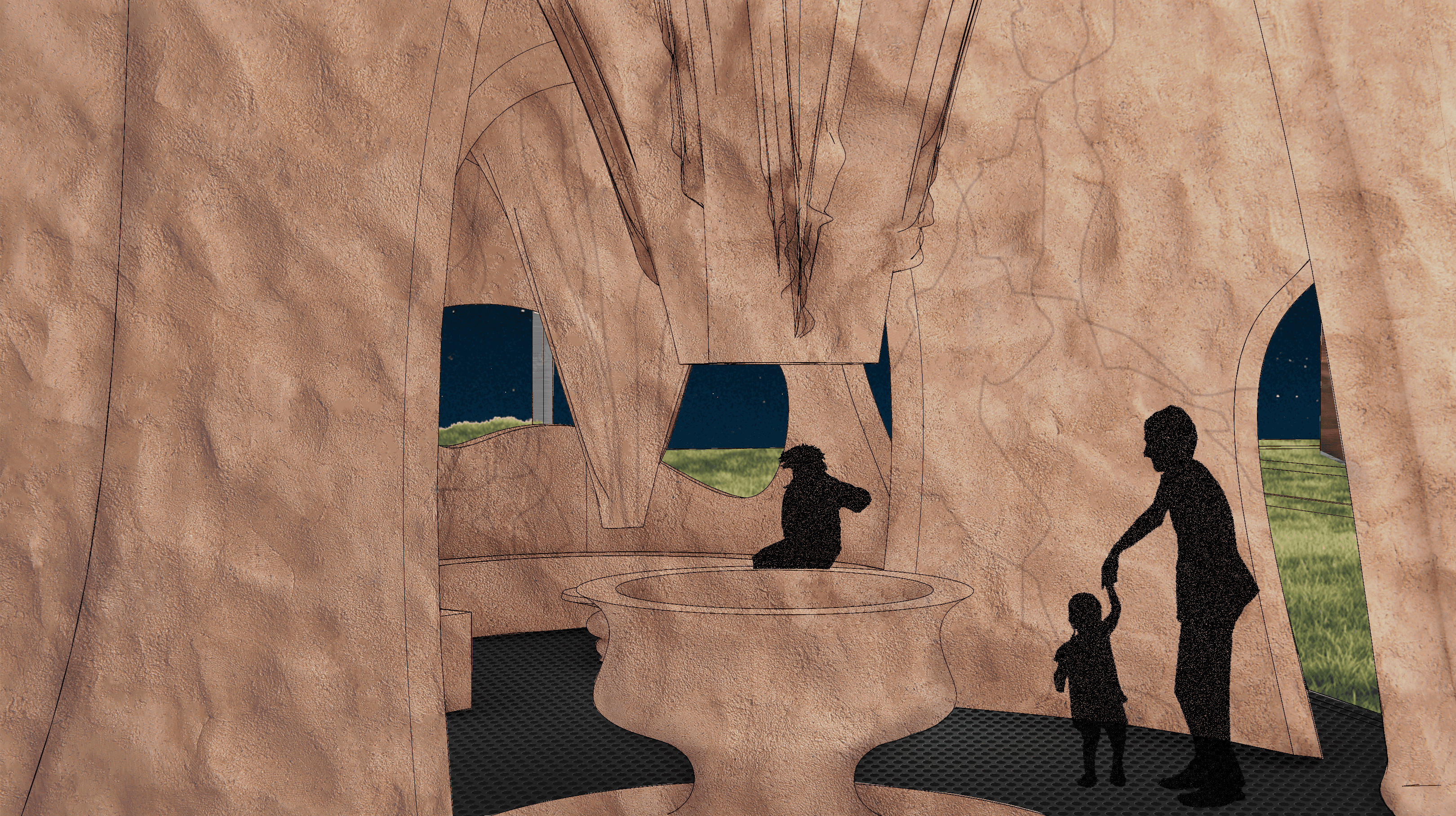
Public architecture often remains static and passive, failing to engage the community in its ongoing life or maintenance. I wanted to challenge the traditional concept of preservation by designing a structure that was specifically engineered to decay, thereby requiring human intervention to survive.
solution
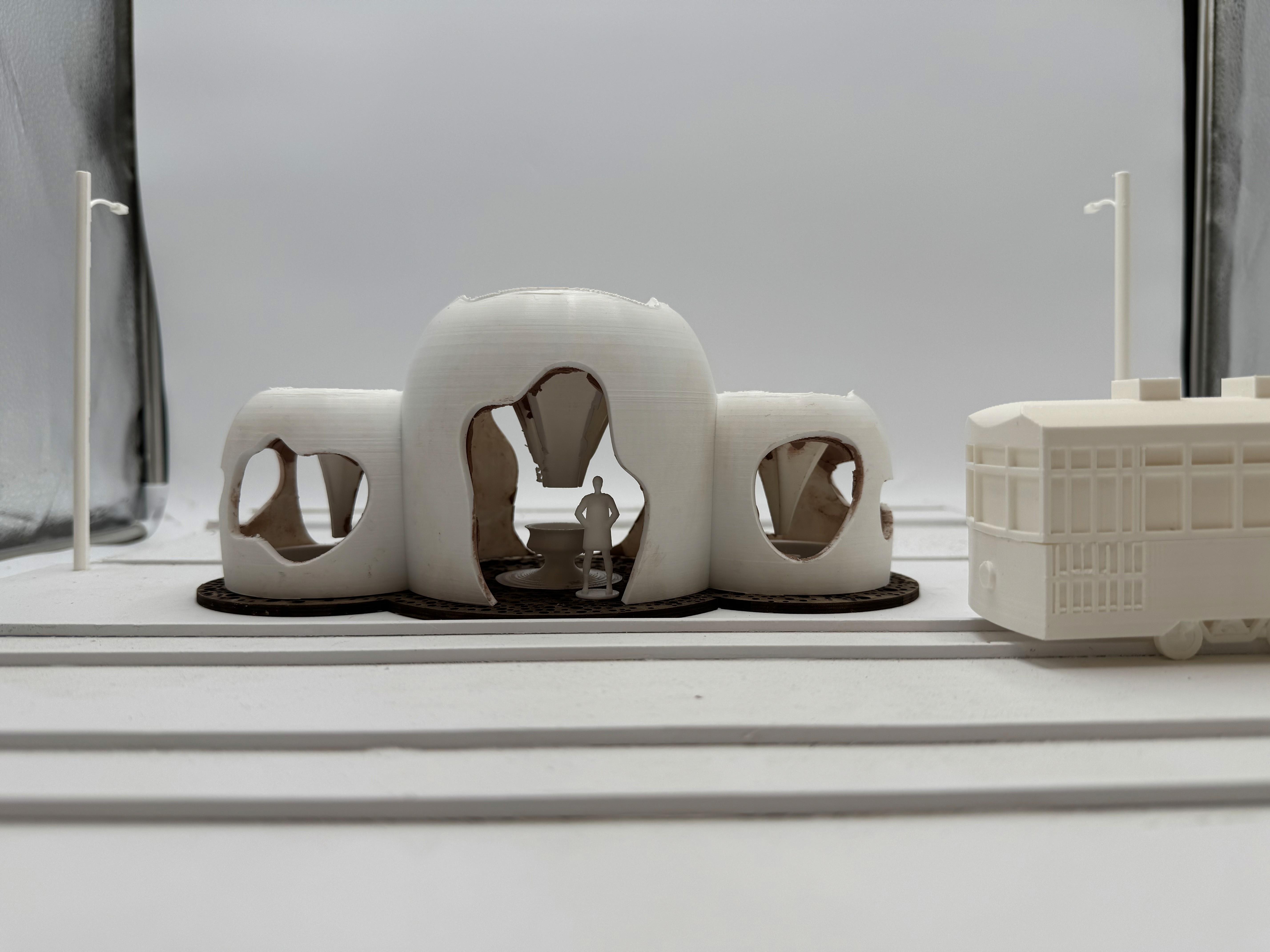
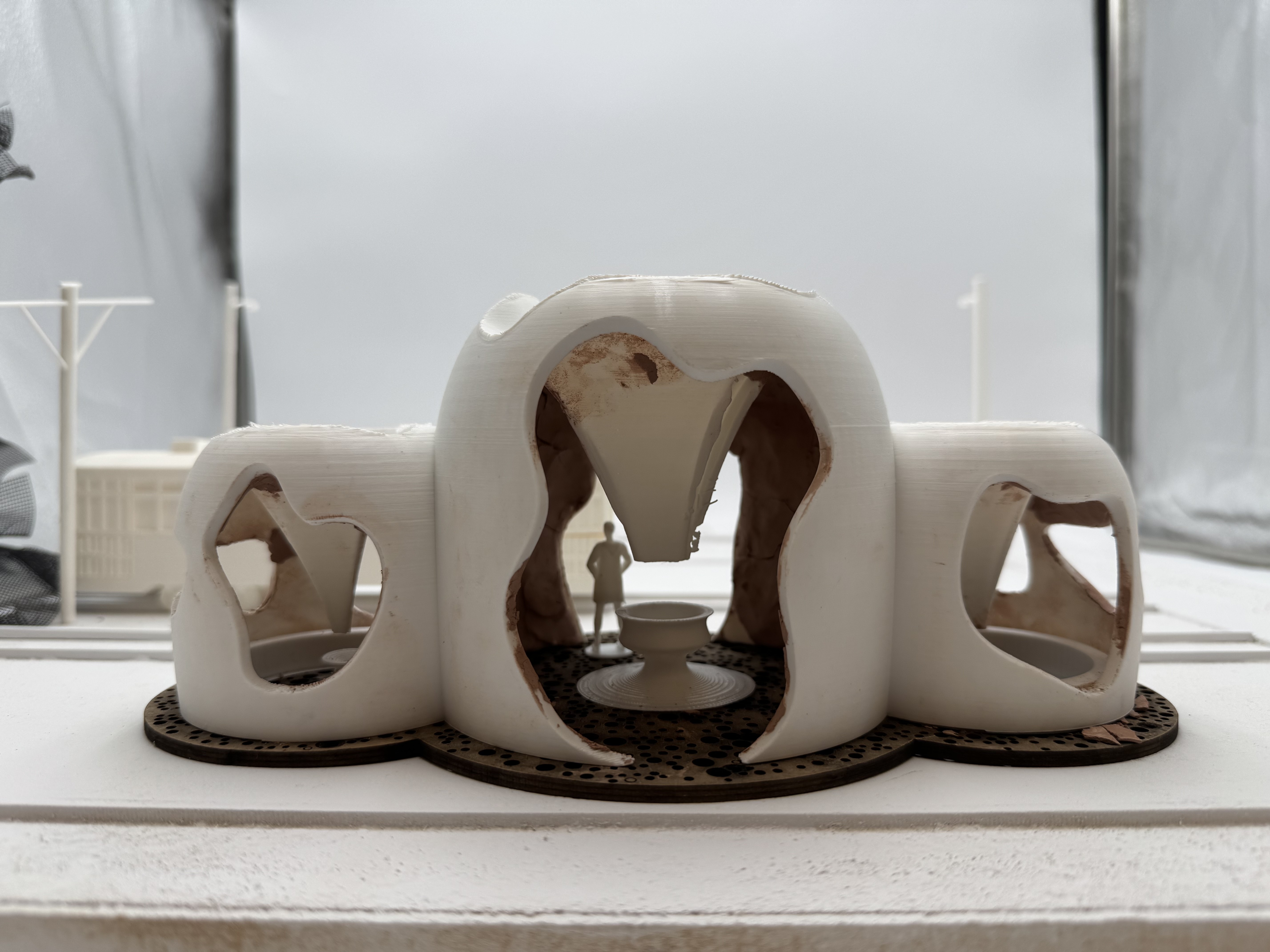
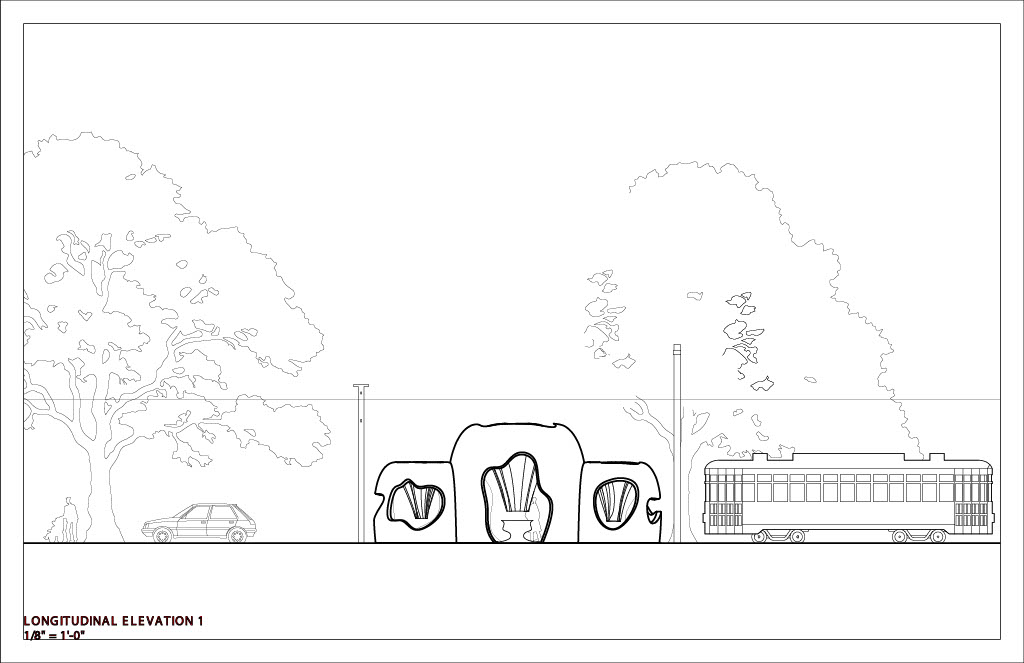
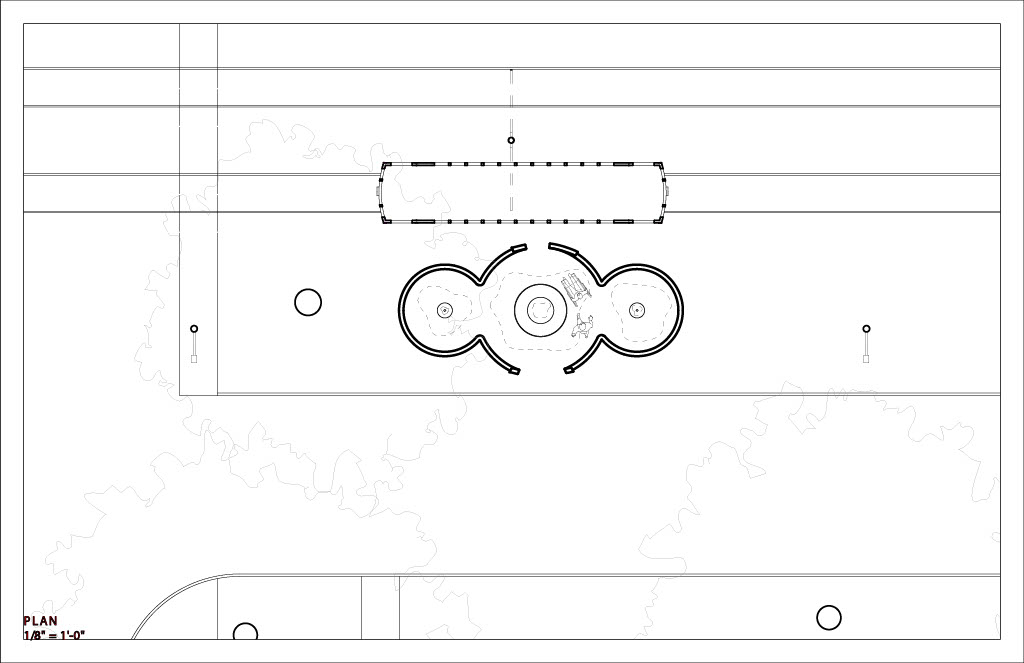
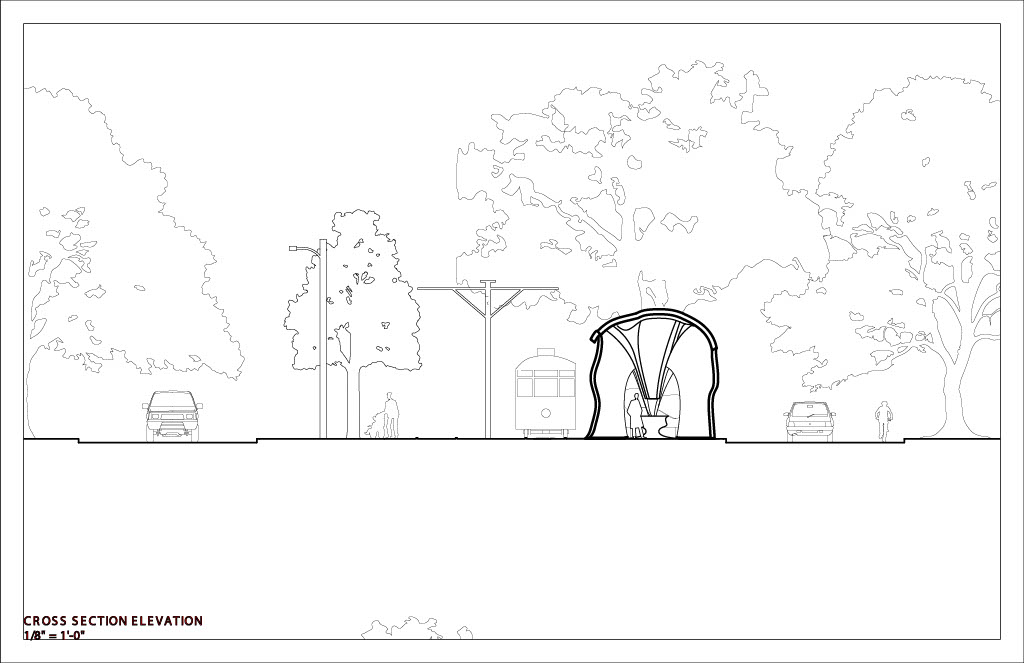
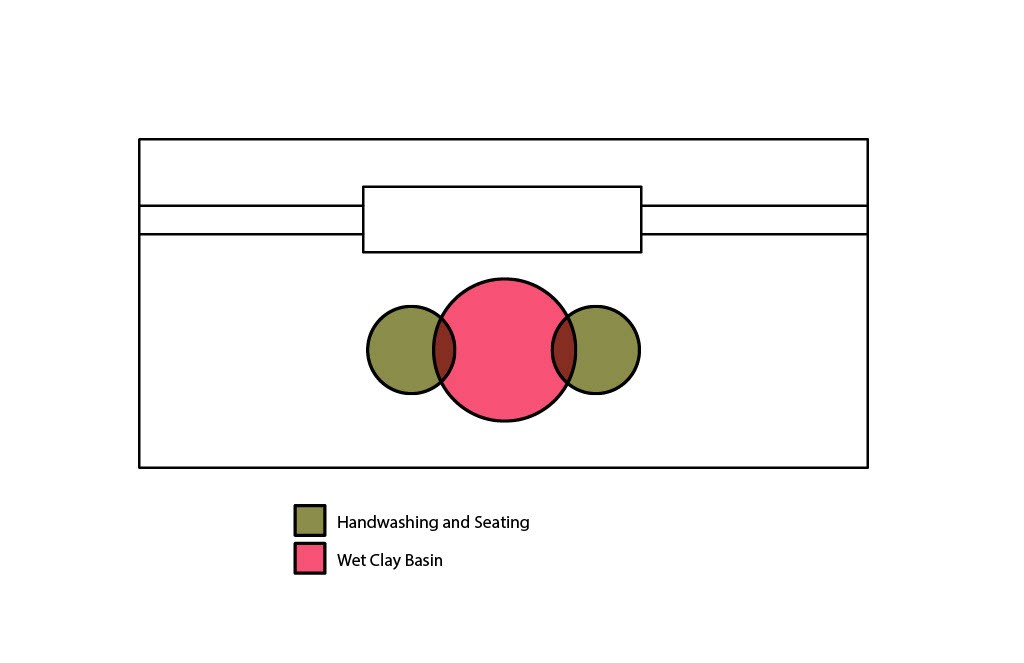
I created a pavilion featuring a sturdy, fired outer shell that protects a raw, unfired clay interior designed to weather and crack over time. A glazed roof intentionally funnels rainwater into a central well to create a clay slurry, inviting visitors to physically mix pigment and repair the fissures by hand. This transforms "maintenance" into a collective ritual where the lines of repair become celebrated marks of community authorship rather than flaws.
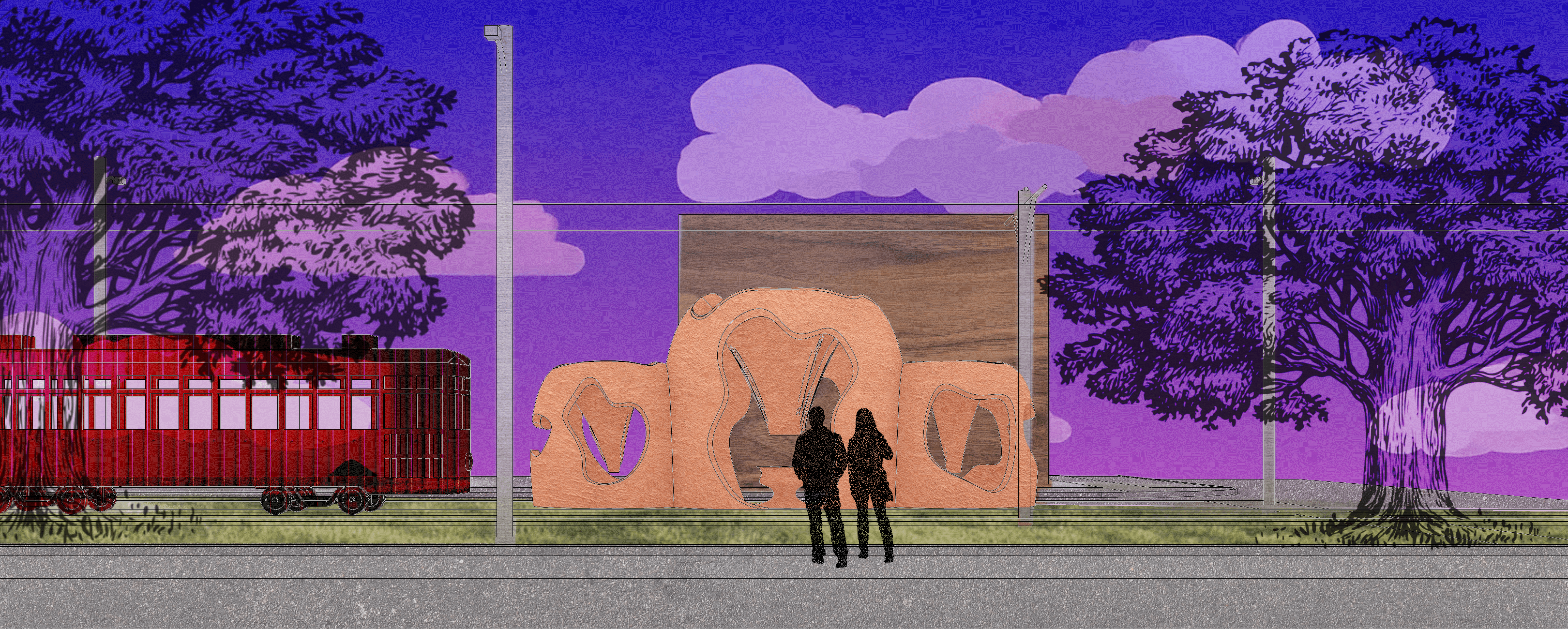
I conceived this project as a critique of static architecture, making the deliberate decision to design a structure that requires human care to survive. The narrative is driven by a stark contrast in materiality: I detailed a permanent, fired outer shell to provide structural integrity, while specifying a raw, unfired clay interior designed to be "sacrificial" and weather over time. In the schematic phase, I engineered the roof geometry to actively funnel rainwater into the building rather than away from it, creating a hydrological system that washes debris into a central well to be rejuvenated into a slurry. This design choice transforms the act of maintenance into a public ritual; by inviting visitors to press pigmented clay into the eroded fissures, I envisioned the architecture as a living record where the "scars" of repair become celebrated marks of collective authorship.
01

02
03
04

05
06
07
08
see also